The conversation you're avoiding is already happening
Most leaders have a list of conversations they aren't having. Waiting feels kind and careful. It isn't. Here's what the silence teaches your team, and how to tell the truth in a way that strengthens the relationship instead of damaging it.
Think about a manager with a talented direct report who's hurting the team. She interrupts people mid-sentence. She dismisses ideas with visible impatience. She steers meetings back to her own priorities before anyone else has finished.
He's watched this for four months and hasn't said a word. He tells himself he's waiting for the right moment, or more evidence, or a little more trust in the relationship.
Most of us have been that manager. I know I have.
The silence is the message
Here's the problem with waiting. Joseph Grenny and his co-authors put it well in Crucial Conversations: every week you delay, the other person gets an implicit message that the behavior is fine. You're already having the conversation. You're just having it with yourself.
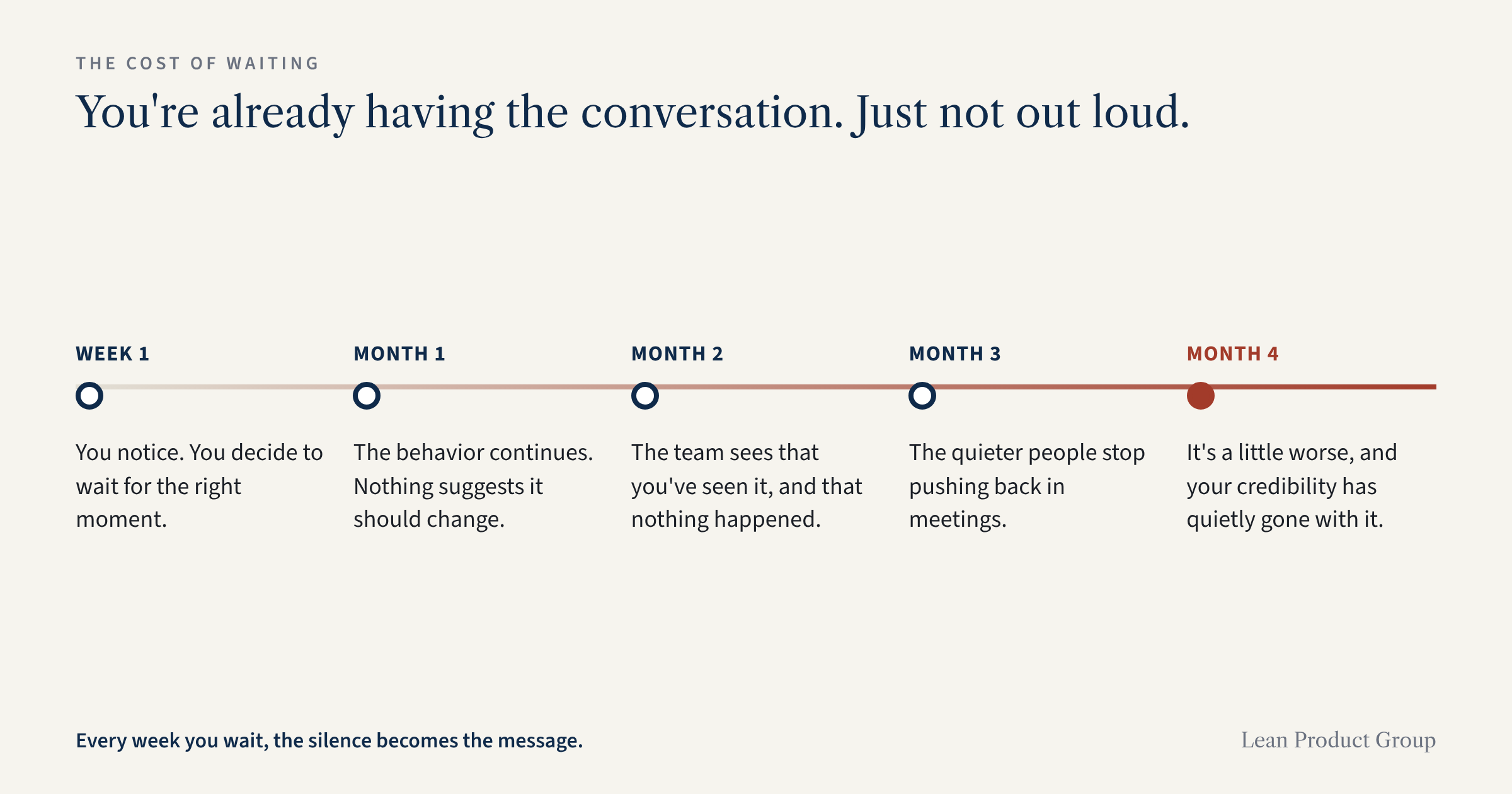
And it's not only the one person who's listening. The rest of the team noticed months ago. They've also noticed that you noticed. The quieter people have done the math and decided pushing back isn't worth it. None of that shows up on a dashboard, but it's real, and it compounds.
The avoided conversation feels free. It's actually the most expensive thing on your calendar.
Two ways to get it wrong
Grenny defines a crucial conversation as one where opinions differ, the stakes are high and emotions run strong. Under that kind of pressure, most of us default to one of two moves.
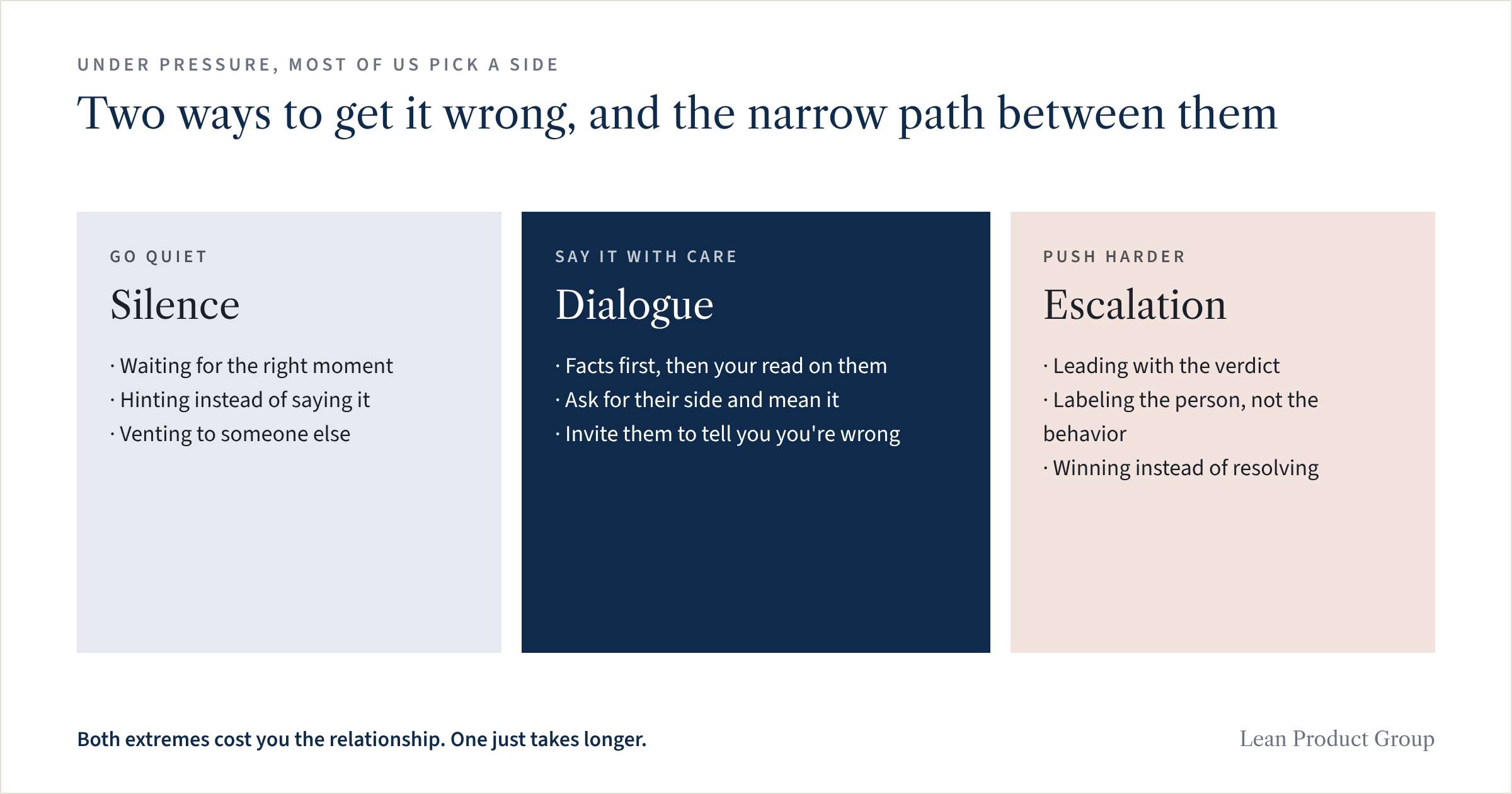
Some of us go quiet. We hint, we wait, we complain to a peer instead of talking to the person. Others push harder. We lead with the conclusion, label the person instead of the behavior and walk in trying to win.
Both feel like they protect something. Silence protects the relationship, or so we tell ourselves. Escalation protects the standard. In practice both cost you the relationship. One just takes longer.
Start with what you actually want
The first move Grenny recommends happens before you say anything. Ask yourself what you really want, not just out of this conversation, but for this person, for the team and for the relationship six months from now.
It sounds soft. It isn't. Leaders who skip this step walk in to win, and the other person can feel it within the first minute. Knowing why you're speaking doesn't soften the message. It shapes how the message comes out.
James Hunter makes a related point in The Servant. He defines love as action in service of someone else's growth, and that includes honesty. Withholding hard feedback to avoid discomfort isn't kindness. It's choosing your comfort over their development. The courage to say the hard thing is what separates a servant leader from a people-pleaser.
Separate what you saw from what it means
The most useful habit I know for these conversations is pulling apart two things that feel like one: what you observed and the story you've built around it.
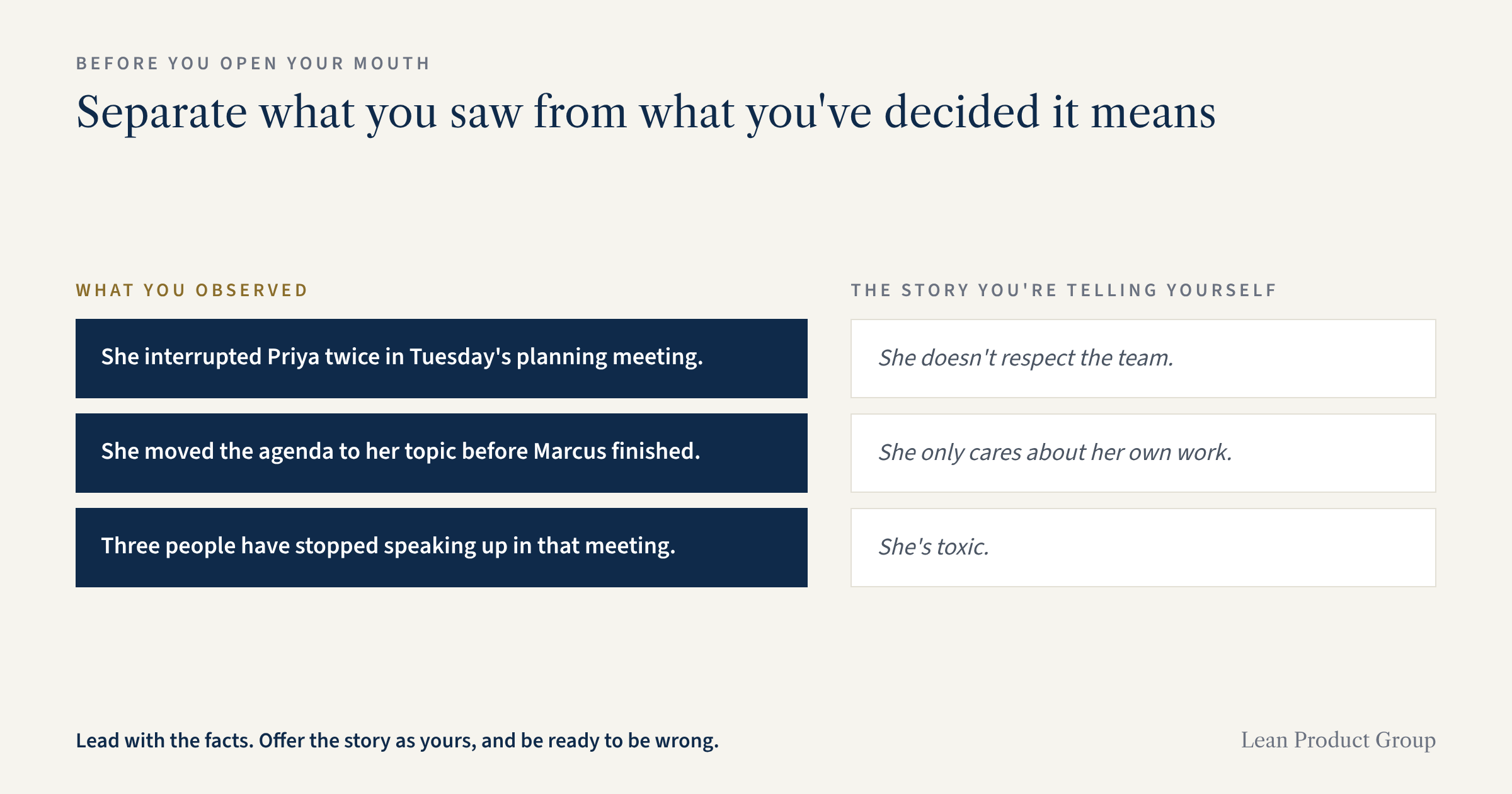
The facts on the left are hard to argue with. The stories on the right are exactly what makes people defensive, and they might be wrong. Maybe she's under pressure you don't know about. Maybe nobody ever told her how it lands.
So lead with the facts. Then share your interpretation, clearly owned as yours: "Here's what I've been telling myself, and I honestly don't know if it's right." Then ask for her side, and mean it.
That's the core of the STATE method from Crucial Conversations: share your facts, tell your story, ask for theirs, talk tentatively and invite them to push back. Each step keeps the conversation from turning into an accusation or an interrogation.
Try this before Friday
Write down one conversation you've been avoiding for more than two weeks. Next to it, write the reason you've been giving yourself for not having it yet.
Then read that reason back and ask whether it's actually true, or just comfortable. In my experience, the reason is almost always the real obstacle.
The rest of the module
This is the sixth module of The Servant Leader, our leadership curriculum at Lean Product Group. The full module includes a self-assessment on how you handle conflict under pressure, a step-by-step walkthrough for scripting a real conversation you've been putting off, an exercise to actually have it this week and debrief what happened, and a coaching prompt to stress-test your approach before you walk in.
The course is free. Sign in with your email and it's yours.